


77.32% of parents see better grades in 3 months!
Before comparing IB and Cambridge, check that you're comparing the right things.
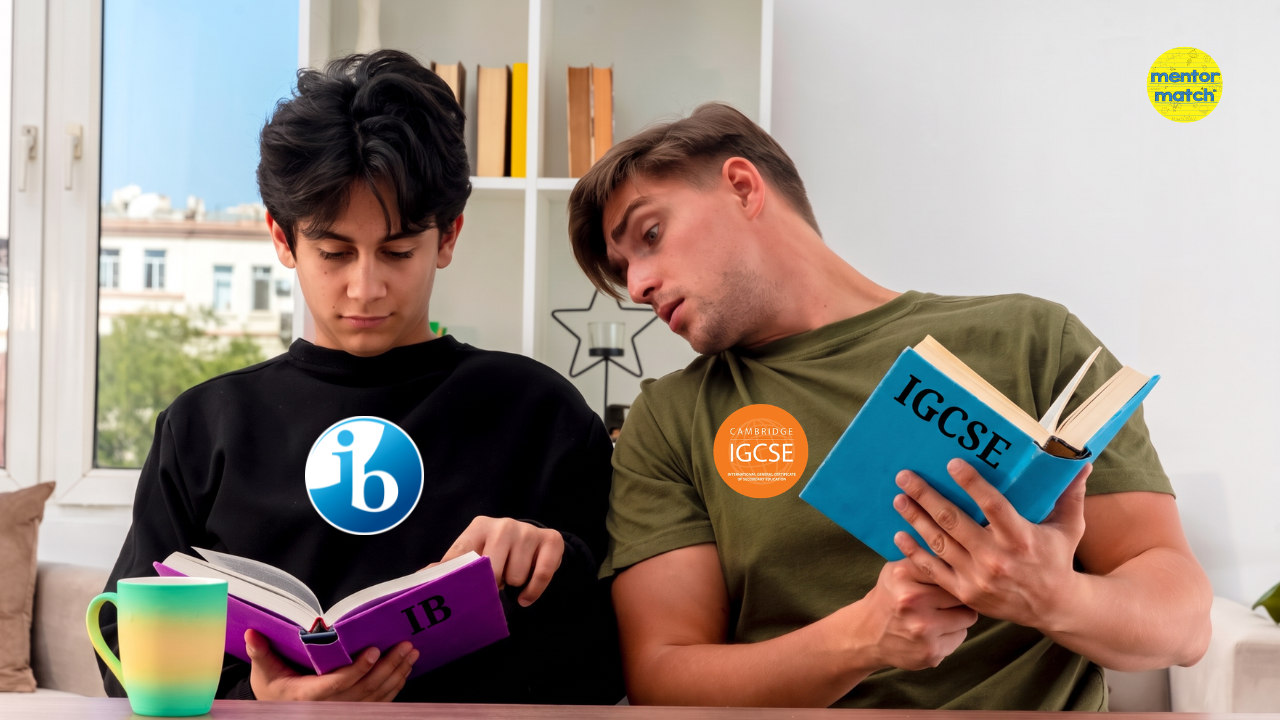
IGCSE is one Cambridge qualification, while IB and Cambridge offer broader academic pathways that can shape your child’s learning and assessment for several years.
That is why many parents in India and the UAE ask, “Which is better- IB or IGCSE?” The question is understandable, but it does not compare two programmes at exactly the same stage. Your child may take IGCSE between ages 14 and 16, then move into the IB Diploma between 16 and 19, or continue through another Cambridge pathway.
So let’s compare the pathways year by year, because the answer may depend less on the programme’s reputation and more on what suits your child.
IB vs IGCSE: Why They're Not Actually Rivals
Cambridge IGCSE is, in Cambridge's own words, the world's most popular international qualification for 14 to 16-year-olds.
That's the IB Middle Years Programme (MYP), a five-year framework for ages 11 to 16, with optional eAssessment in the final year.
So at 14, the genuine fork is IGCSE vs MYP.
At 16, it's IB Diploma vs A Levels (that's a whole guide of its own).
Once you see the ladder laid out like this, the curriculum differences suddenly make a lot more sense.
That 45-point ceiling? It's six subjects at a maximum of 7 each, plus up to 3 bonus points from Theory of Knowledge and the Extended Essay combined.
Students need at least 24 points to earn the diploma at all.
Families looking at British-curriculum schools in the UAE will also see GCSE on some prospectuses, which brings up a separate comparison.
Which brings us to the question every parent quietly Googles at midnight: is IB harder than IGCSE?
Honestly, yes, but mostly because it's two years further along.
The Diploma stacks breadth (six subjects at once) on top of independent research, while IGCSE lets your child go deep on the subjects they actually chose.
Neither is "better"; they reward different habits. And if your child's school offers IGCSE, there's a second comparison worth knowing before you sign anything.
What's the Difference Between IGCSE and GCSE?
GCSE is England's national qualification, and IGCSE is its international cousin.
Cambridge aligns IGCSE standards with the GCSE taken in England, so it's the same level, built for students learning outside the UK.
The real differences are in the details:
- Where it's taken: GCSE is designed for schools in England; IGCSE runs in international schools worldwide, including India and across the UAE.
- Grading: GCSEs are graded 9-1, where a 4 is a "standard pass". Cambridge IGCSE mostly uses A*-G, with a 9-1 option.
- Converting grades: the bottom of a 7 lines up with the bottom of an A, and the bottom of a 4 with the bottom of a C.
- Exam sessions: Cambridge IGCSE runs a June and a November series (plus a March series for schools in India), so students get more than one window a year.
- Subject choice: 70+ IGCSE subjects in any combination.
So do universities prefer IGCSE or GCSE? Since both sit at the same level, the bigger question on any application is what your child does next: the IB Diploma or A Levels.
Whichever qualification your child sits at 16, the next stage (A Levels or the IB Diploma) builds directly on it.
A topic left weak at 14 or 15 tends to come back two years later at a harder level, which is where outside help is most useful.
Can I Find IB and IGCSE Tutoring in UAE and India?
Yes, and the smartest time to look isn't the panicked month before mocks.
The jump from IGCSE to the IB Diploma is where small gaps get expensive: a shaky algebra foundation shows up in HL Maths, and weak essay structure shows up in the Extended Essay.
Spot those early, and the move at 16 feels like a step instead of a cliff.
MentorMatch offers personalised 1:1 online tutoring for IB students (MYP and DP) and IGCSE students in Abu Dhabi and across the UAE, with vetted tutors.
Every student starts with a diagnostic test that names the exact gaps.
From there, a vetted tutor:
- works to your child's actual board, syllabus and tier
- builds the question technique each exam rewards, from command words to how marks are allocated
- runs a mastery check of 3 exam-style questions every session
- sets 1 proctored mock exam a month, so the evidence reaches the school before the tier decision does
- sends report cards, so you can follow the trend week by week through the term
Book a free session and find out.


