


77.32% of parents see better grades in 3 months!
A recent global IB Diploma ranking has put a spotlight on a question many parents ask: what does it actually take for a student to achieve a high IB score? The answer is not simply more revision hours. Subject understanding, assessment technique, consistent feedback and a clear plan all matter.
IB Diploma results 2026: The result behind the headlines
In its 2026 IB Diploma Programme results, Mumbai’s Dhirubhai Ambani International School reported a cohort average of 40.8 out of 45 points for the May 2026 examination session. The school also reported that 13 students achieved the maximum 45 points. The school’s published results provide the figures behind the recent coverage.
Separately, Education Advisers UK’s 2026 ranking placed the school ninth among IB Diploma Programme schools worldwide, according to reporting published on 20 October 2026.
There is an important distinction here: the ranking is produced by a third party. The International Baccalaureate’s own assessment FAQ states that the IB does not publish or endorse school rankings. It also cautions parents against using results alone to decide whether a school is right for an individual learner.
For parents, the useful takeaway is not to compare one child with another school’s average. It is to understand what their own child needs to improve, and how that progress can be measured.
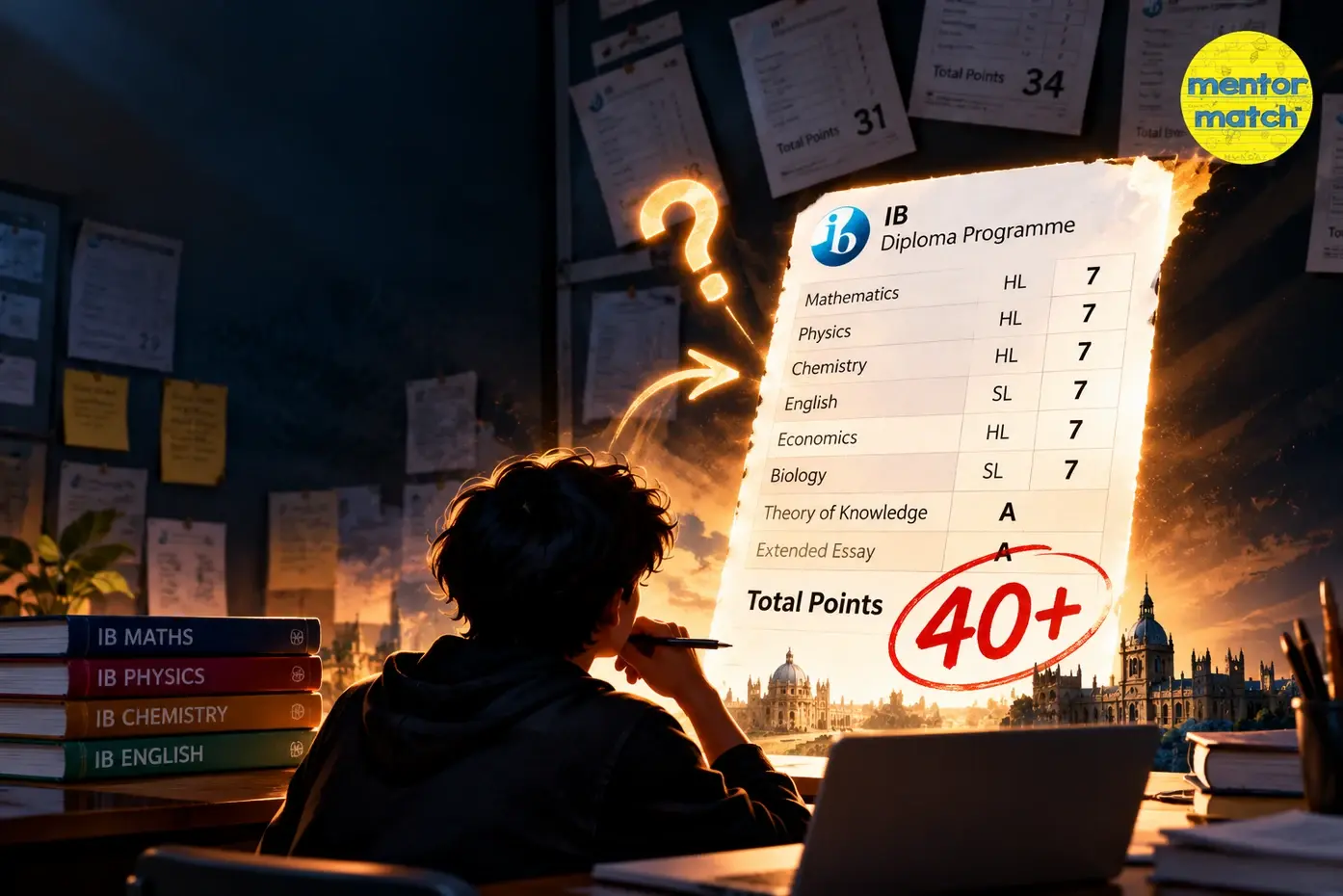
What does an IB score of 40+ mean?
The IB Diploma Programme has a maximum total of 45 points. Students take six subjects and can earn additional points through the core components, Theory of Knowledge (TOK) and the Extended Essay (EE), subject to the programme’s assessment rules.
A high overall score therefore depends on more than performance in one subject. A student may understand the content well but lose marks because an answer does not meet the command term, evidence is not developed clearly, or the response does not match the assessment criteria.
That is why IB Diploma score improvement starts with identifying where marks are being lost—not simply adding more hours to the study timetable.
Parents can also read our guide to IB Diploma Programme structure, subjects, HL/SL and core assessment for a breakdown of how the programme fits together.
Four areas that can make a difference to IB grades
1. Subject knowledge: find the exact gap
In IB Maths, Physics, Chemistry and other demanding subjects, a student may understand a topic in class but struggle to apply it independently in an unfamiliar question.
The first step is to identify the precise gap. Is the student misunderstanding a concept, choosing the wrong method, making repeated calculation errors, or struggling to explain their reasoning?
Each problem needs a different response. Repeating an entire chapter is not always the most effective use of revision time.
2. Exam technique: answer the question being asked
Knowing the content and earning the marks are not the same thing.
Students need to practise interpreting command terms, structuring extended responses, showing working where required, selecting relevant evidence and checking answers against the relevant assessment criteria.
Timed practice is useful when it is followed by specific feedback. Completing more past-paper questions without understanding recurring mistakes can simply reinforce the same habits.
3. HL and SL preparation: prioritise strategically
Higher Level and Standard Level subjects have different demands. Students should understand the content and assessment expectations for each subject they take, then plan their preparation around their current level of understanding and upcoming assessments.
A practical revision plan should identify:
- Which concepts are secure and which need further work.
- Which question types repeatedly cause difficulty.
- Which subjects need more focused practice before the next assessment.
- Whether the student can apply their knowledge under timed conditions.
For subject-specific preparation, explore our IB Maths AA and AI 2027 update.
4. TOK and the Extended Essay: plan the work early
The IB core requires a different approach from revising a conventional subject chapter. Students need to understand the task requirements, organise research, develop a clear line of reasoning and leave time to review their work against the relevant criteria.
A realistic timeline helps prevent core work from competing unnecessarily with subject revision at the last minute. Students should also follow their school’s guidance and the applicable IB academic-integrity requirements.
How can parents help their child improve an IB score?
Start with evidence rather than assumptions. A useful conversation with your child and their teachers should establish three things:
Where is the student now? Review recent assessments, feedback and recurring mistakes to establish a realistic starting point.
What is preventing progress? Separate gaps in understanding from exam technique, time management and incomplete preparation.
How will improvement be checked? Set specific learning priorities, practise them, review the work and reassess progress regularly.
This gives the student a clear next step instead of a broad instruction to study harder. It also helps parents understand whether the current preparation plan is addressing the actual problem.
For students who are uncertain about their longer-term targets, our guide explains what IB score you may need for university admission. Entry requirements vary by university, course and applicant, so students should always check the relevant university’s current requirements.
Where personalised IB tutoring fits
When a student keeps losing marks in the same areas, individual support can help make the next steps more specific.
At Mentor Match, the learning process follows the GPS Framework™: Gap, Personalise, Score.
- Gap: Identify the specific concept or skill the student needs to strengthen.
- Personalise: Build sessions around the student’s actual curriculum, current understanding and learning priorities.
- Score: Use monthly invigilated assessments to track progress against a measurable baseline.
With 1:1, curriculum-trained tutoring, the focus stays on the student’s needs—not on repeating material they have already mastered. Sessions can also be scheduled around the family’s timetable.
The objective is to make progress visible and measurable, while helping the student learn how to perform in real exam conditions.
The takeaway for IB parents
A high IB Diploma score is a useful point of reference, but a school ranking cannot tell you what your child needs next. The more useful question is whether your child understands the material, can apply it to the assessment and is making measurable progress in the areas that need attention.
A clear baseline, targeted practice and regular feedback give families a more practical way to approach IB score improvement than relying on revision hours alone.
Book a free demo class to discuss your child’s IB subjects, current learning gaps and preparation priorities with Mentor Match.


